

Magento Performance Optimisation UK: Why Speed Determines Revenue

Written by Nayab
5 Minute Read

Table of Contents
- Why Magento Website Performance Directly Impacts UK Search Rankings
- Magento Speed Optimisation UK: 7 High-Impact Strategies
- Magento Conversion Rate Optimisation UK: Performance Meets Revenue
- Magento Performance Best Practices: A Priority Checklist
- Ecommerce Website Performance UK: How to Audit Your Magento Store
- Frequently Asked Questions
- Conclusion
A slow Magento store does not just frustrate users. It destroys revenue. Every 100 milliseconds of additional load time costs an ecommerce site approximately 1% in conversions. For a UK store generating £500,000 annually, a 500ms improvement in page speed translates directly into tens of thousands in recovered revenue. UK ecommerce is competitive. Customers leave in seconds. If your Magento website performance is not optimised, your competitor collects the sale.
Magento powers approximately 8% of the global ecommerce market and processes over $6.2 billion in GMV in a single Black Friday. Businesses running on Magento report 29% higher platform revenue compared to industry benchmarks. Those results, however, depend entirely on store performance. Businesses that invest in custom Magento development services and ongoing performance optimisation consistently outperform stores that treat performance as an afterthought.
This guide covers the core Magento performance optimisation strategies UK merchants need to implement in 2026 to improve speed, pass Core Web Vitals, and increase revenue.
Why Magento Website Performance Directly Impacts UK Search Rankings
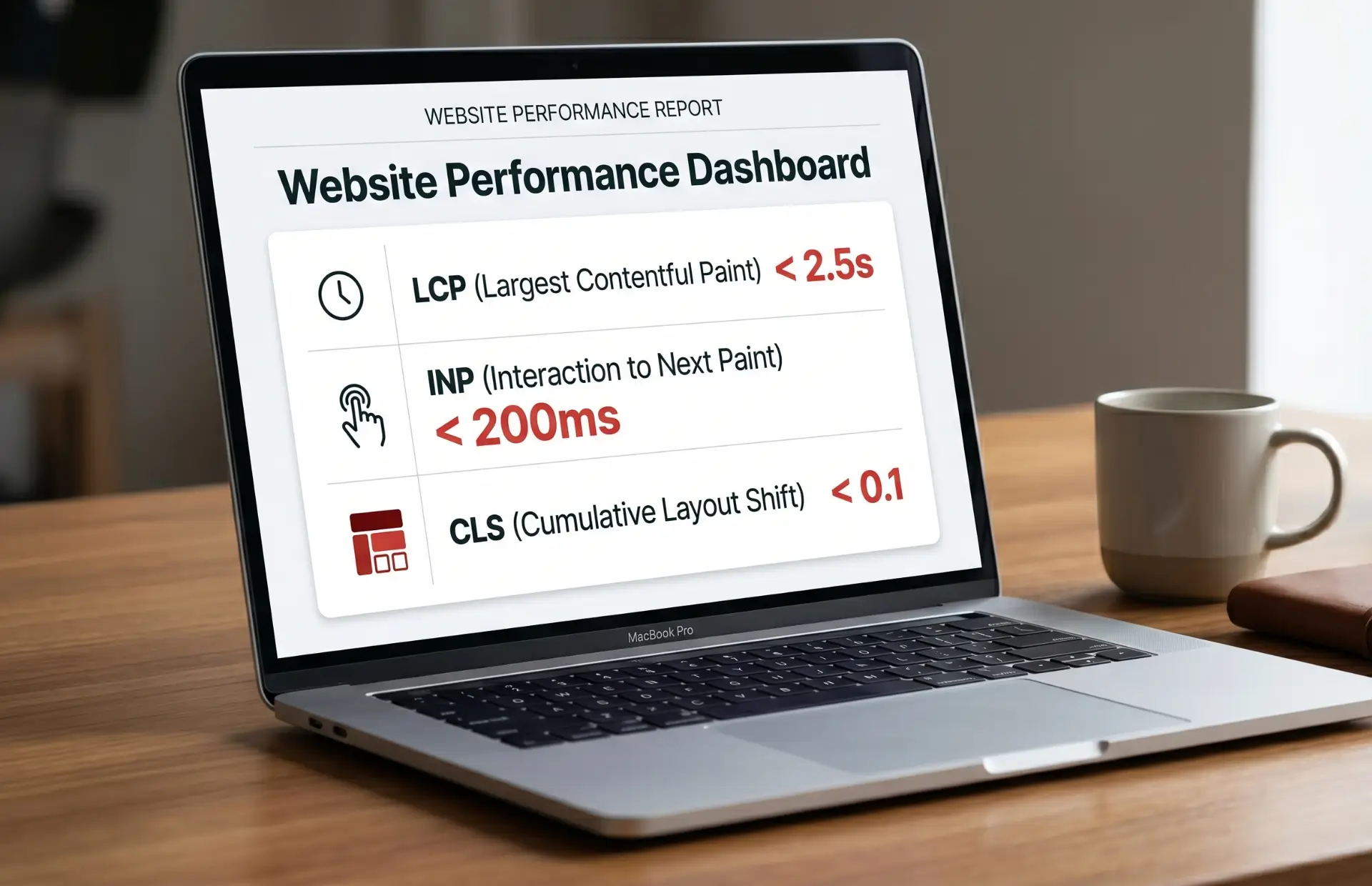
Google uses Core Web Vitals as a confirmed ranking factor. A Magento store that fails LCP, INP, or CLS benchmarks ranks lower in search results, regardless of content quality or backlink profile. Sites with strong Core Web Vitals hold a 3.2-position ranking advantage over slower competitors, and fixing failed metrics produces an average 12% increase in organic traffic.
For UK ecommerce businesses, organic visibility is tied directly to revenue. A higher search ranking delivers more qualified traffic. Faster pages retain that traffic and convert it. Magento site speed and SEO are not separate disciplines. They operate as a single revenue system.
The three Core Web Vitals metrics every Magento store must target:
|
Metric |
What It Measures |
Good Score |
|
LCP (Largest Contentful Paint) |
How fast the main visual element loads |
Under 2.5 seconds |
|
INP (Interaction to Next Paint) |
How quickly the page responds to user input |
Under 200 milliseconds |
|
CLS (Cumulative Layout Shift) |
Visual stability as the page loads |
Under 0.1 |
As of 2026, only 43.4% of mobile sites meet all three Core Web Vitals thresholds. UK Magento stores that achieve "good" scores across all three metrics immediately separate themselves from the majority of competitors.
Magento Speed Optimisation UK: 7 High-Impact Strategies

-
Enable Full Page Cache (FPC) and Varnish
Magento 2 includes a built-in Full Page Cache that stores rendered HTML for repeat visitors. Combining FPC with Varnish Cache reduces server response time from multiple seconds to under 100 milliseconds for cached pages. This single configuration change produces the largest speed improvement in most Magento installations and directly improves LCP scores.
-
Implement a Content Delivery Network (CDN)
A CDN distributes static assets including images, CSS, and JavaScript files across servers located geographically close to UK users. Without a CDN, every asset request travels to the origin server. With a CDN, assets load from a nearby edge node. Edge servers produce an average Time to First Byte (TTFB) of 120 milliseconds compared to 820 milliseconds on shared hosting. For UK visitors, a CDN configured with UK edge locations reduces asset load time by 60% to 80%.
-
Optimise and Compress All Images
Product images account for the majority of page weight on Magento ecommerce stores. Unoptimised images are the primary cause of poor LCP scores. The correct approach to Magento page speed optimisation for images includes three actions:
- Convert images to WebP format, which reduces file size by 25% to 35% compared to JPEG with equivalent visual quality
- Implement lazy loading so images below the fold load only when the user scrolls to them
- Serve responsive images at the correct resolution for each device to eliminate wasted bandwidth on mobile
-
Minify and Defer JavaScript and CSS
Render-blocking JavaScript prevents the browser from displaying page content until scripts finish loading. Magento stores accumulate JavaScript from core modules, third-party extensions, and custom code. Minifying CSS and JavaScript reduces file size. Deferring non-critical scripts means the browser renders visible content first. This directly improves both LCP and INP scores. Removing unused third-party extensions during this process also eliminates hidden performance bottlenecks that accumulate over time.
-
Optimise the Magento Database
Magento stores database queries for every product, order, and customer interaction. Over time, log tables, orphaned records, and unindexed queries slow down every page request. A structured database optimisation process includes:
- Cleaning log tables (report_event, report_viewed_product_index)
- Adding database indexes to high-frequency query fields
- Enabling flat catalogue for product and category data
- Running regular automated database maintenance
Stores with optimised databases see server response times reduce by 40% to 60% compared to unoptimised installations of equal size.
-
Use Magento's Built-In Indexing and Caching Tools Correctly
Magento uses indexers to pre-calculate data for product prices, inventory, and search. Indexers set to "Update on Save" rather than "Update by Schedule" create performance spikes every time a product is edited. Setting indexers to schedule mode distributes the processing load and prevents frontend slowdowns during catalogue management. Combined with correct configuration of the Magento cache types including block HTML cache, collection data cache, and config cache, this approach eliminates a significant category of preventable performance degradation.
-
Consider the Hyvä Theme for Frontend Performance
The Hyvä theme for Magento 2 replaces the default Luma frontend with a lightweight architecture built on Alpine.js and Tailwind CSS. Magento stores migrated to Hyvä consistently report 47% increases in conversion rates and 19% revenue increases post-migration. The default Luma theme ships with heavy JavaScript libraries that create unnecessary payload. Hyvä eliminates this overhead and produces Core Web Vitals scores that Luma cannot match on equivalent infrastructure.
Magento Conversion Rate Optimisation UK: Performance Meets Revenue
Magento ecommerce optimisation is not only a technical exercise. Performance improvements produce measurable revenue results. The data is consistent across industries and store sizes:
- A Magento store loading in 1 second converts at 3 times the rate of a store loading in 5 seconds
- A 0.1 second improvement in load time increases ecommerce conversions by 8.4% and average order value by 9.2%
- A 1-second delay in page load costs the average ecommerce store 7% of conversions, based on Deloitte research across 37 major retail websites
- Vodafone reported an 8% increase in sales after optimising Largest Contentful Paint on their landing pages
- Walmart recorded 2% higher conversions for every 1-second improvement in load time
For UK merchants investing in Magento performance services, these statistics translate into a clear ROI framework. A store generating £1 million annually that reduces load time by 2 seconds recovers between £140,000 and £200,000 in previously lost revenue through improved conversion rate alone.
Magento Performance Best Practices: A Priority Checklist
UK Magento merchants should treat performance as an ongoing programme rather than a one-time project. The following checklist covers the minimum standards for a performant Magento 2 store in 2025:
Server and Infrastructure
- PHP 8.2 or higher with OPcache enabled
- Redis configured for session storage and cache backend
- MySQL 8.0 with query cache active
- Magento 2.4.7 or later (2.4.8 delivers the strongest security and performance improvements)
Frontend Performance
- All images converted to WebP with lazy loading active
- CSS and JavaScript minified and merged
- Hyvä or a performance-optimised theme in use
- Critical CSS inlined for above-the-fold content
CDN and Caching
- CDN active for all static assets
- Full Page Cache enabled with Varnish
- Browser caching headers set correctly
Core Web Vitals Targets
- LCP under 2.5 seconds on mobile
- INP under 200 milliseconds
- CLS under 0.1
Ecommerce Website Performance UK: How to Audit Your Magento Store
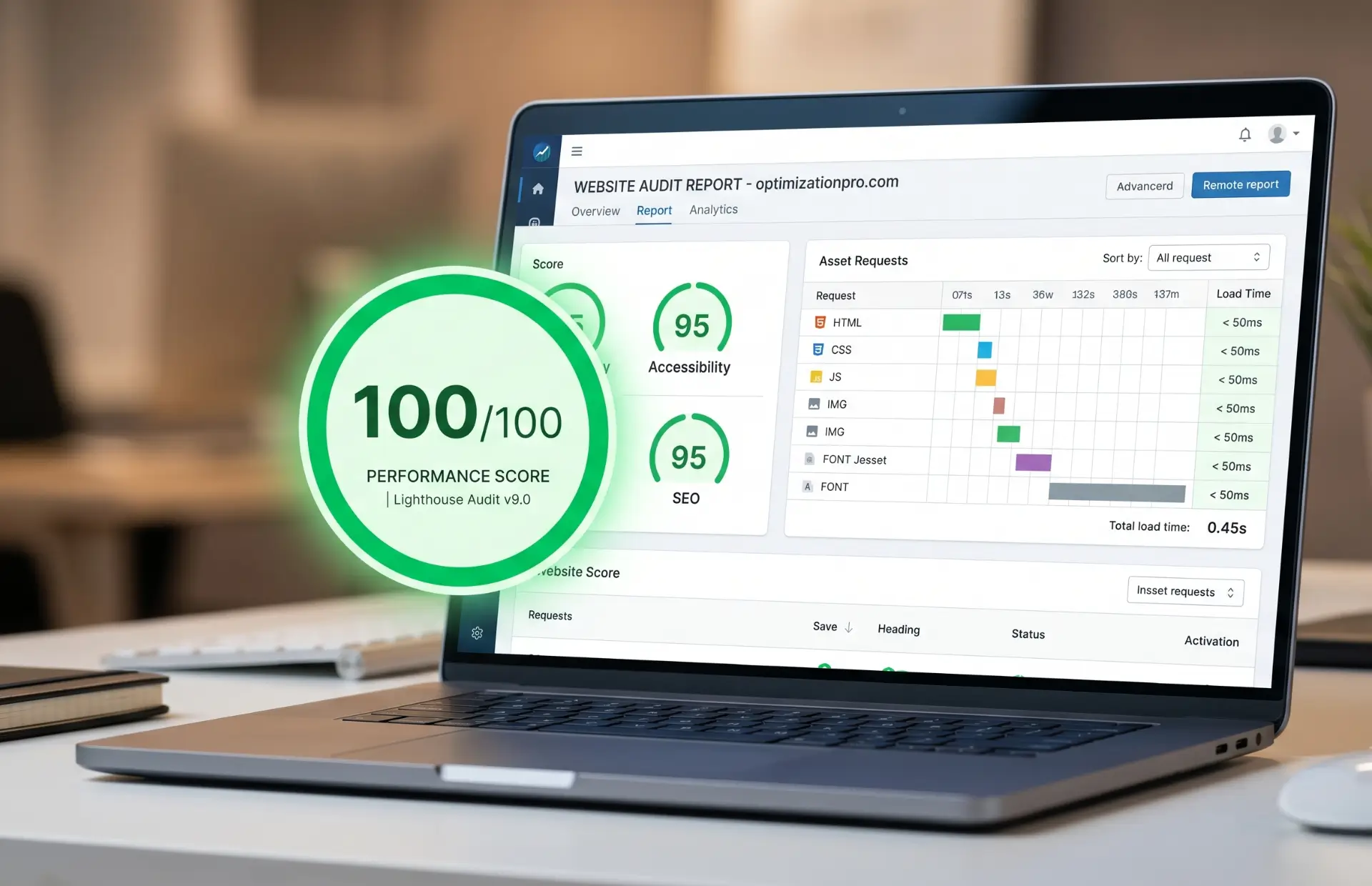
Before implementing optimisations, UK merchants need a baseline measurement. Four tools provide reliable performance data for Magento stores:
Google PageSpeed Insights delivers real-world performance scores based on Chrome User Experience Report data segmented by mobile and desktop. It identifies specific failing metrics and provides actionable recommendations.
GTmetrix provides waterfall analysis showing exactly which resources create the longest load delays. It identifies render-blocking files and oversized assets by name.
Google Search Console reports Core Web Vitals performance across all pages in a Magento store using real user data. It segments pages into "Poor", "Needs Improvement", and "Good" categories and identifies which URL groups require priority attention.
Lighthouse runs inside Chrome DevTools and produces detailed audits covering performance, accessibility, and SEO simultaneously. It provides opportunity estimates showing how much time each fix saves.
Running audits on category pages, product pages, and checkout separately is essential. Each page type carries different performance characteristics and requires targeted fixes.
Frequently Asked Questions
What is Magento performance optimisation?
Magento performance optimisation is the process of improving the speed, responsiveness, and stability of a Magento ecommerce store. It covers server configuration, caching, image compression, JavaScript deferral, database maintenance, and Core Web Vitals improvements. The goal is to reduce page load time, improve search rankings, and increase ecommerce conversion rates.
How long does Magento speed optimisation take?
A full Magento speed optimisation engagement for a UK ecommerce store takes between 2 and 6 weeks depending on store size, extension count, and the depth of technical issues identified. Quick wins such as enabling Full Page Cache, activating Redis, and compressing images can be completed within days. Frontend architecture changes such as migrating to the Hyvä theme require longer timelines.
What is a good page load time for a Magento store in the UK?
A Magento store should achieve a server response time under 200 milliseconds and a full page load time under 3 seconds on mobile for UK users. Google's Core Web Vitals benchmark sets Largest Contentful Paint at under 2.5 seconds as the "good" threshold. Stores loading in under 2 seconds outperform the majority of UK ecommerce competitors on both performance scores and conversion rates.
Does Magento page speed affect Google rankings?
Yes. Google confirmed Core Web Vitals as a ranking signal in 2021. Magento stores that fail LCP, INP, or CLS thresholds receive lower rankings than faster competitors with equivalent content quality and authority. Improving Magento site speed and SEO performance simultaneously is the most efficient way to recover lost organic search positions.
How does Magento performance optimisation increase revenue?
Faster Magento stores convert at higher rates. A 1-second improvement in page load time increases ecommerce conversions by 7% to 8.4% based on data from Deloitte and Portent. Improved Core Web Vitals scores produce higher search rankings, which deliver more qualified organic traffic. More traffic at a higher conversion rate results in directly measurable revenue growth without increasing paid advertising spend.
What causes poor performance on a Magento website?
The most common causes of poor Magento website performance are unoptimised product images, render-blocking JavaScript from third-party extensions, disabled or misconfigured Full Page Cache, shared hosting with insufficient PHP memory allocation, absence of a CDN, and an unindexed or bloated database. Legacy Magento 1 installations and outdated Magento 2 versions below 2.4.6 also produce performance deficits that require platform upgrades to resolve.
Is Magento 2 faster than Magento 1?
Magento 2 is significantly faster than Magento 1 under equivalent conditions. Magento 2 supports full-page caching natively, ships with built-in Varnish integration, uses a more efficient database schema, and supports modern PHP versions including PHP 8.2. Magento 1 reached end of life in June 2020 and no longer receives security or performance updates. UK merchants still on Magento 1 should migrate to Magento 2 to access both performance improvements and continued security support.
Conclusion
Magento performance optimisation UK is not a technical preference. It is a commercial necessity. UK ecommerce customers will not wait for slow pages. Google will not rank them. A Magento store with poor Core Web Vitals, unoptimised images, and misconfigured caching loses revenue to faster competitors every day it goes unaddressed.
The strategies covered in this guide, from Varnish caching and CDN implementation to Hyvä theme migration and database optimisation, each produce measurable gains in speed, search visibility, and conversion rates. Together, they form a complete Magento ecommerce optimisation framework capable of delivering 19% to 47% improvements in revenue and conversion metrics.
Cynosure Designs provides specialist Magento development and performance services for UK ecommerce businesses. If your Magento store is not meeting Core Web Vitals benchmarks or your page speed scores are below target, our team carries out full performance audits and implements the technical fixes that recover lost revenue. Contact us to discuss your Magento performance requirements.
Originally Published June 24, 2026 02:40 PM, Updated June 24, 2026.


Editor's Picks
5 Minute Read | Nayab
5 Minute Read | Sannia
5 Minute Read | Nayab
5 Minute Read | Nayab
We are Google Partners
Being a Google Partner means we deliver excellent customer service, give customers a competitive edge and have been trained to help businesses grow online. We have Digital Marketing Specialists who know the google's algorithm better than any other experts in the field.