

Why Users Leave Websites Despite Good Visual Design

Written by Sannia
5 Minute Read
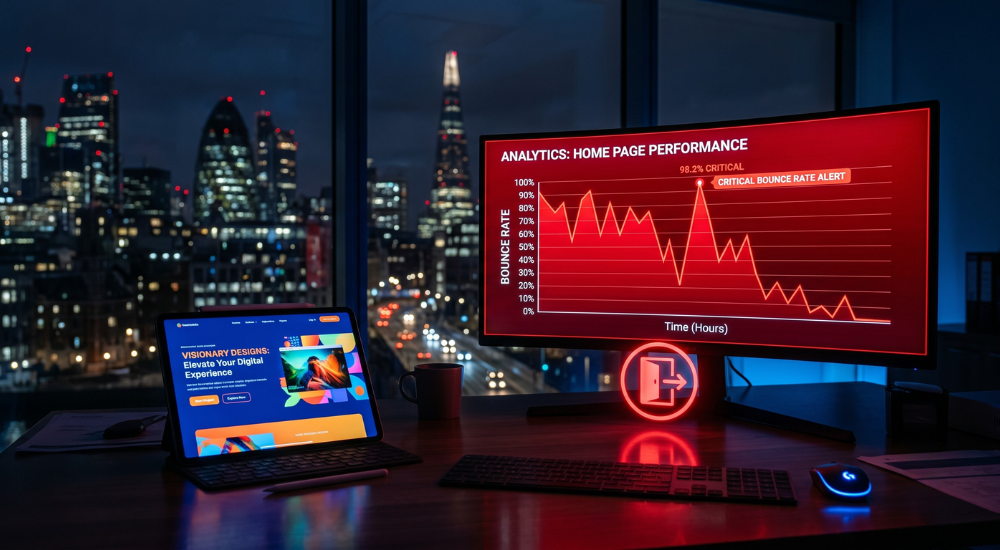
Table of Contents
- Why Users Leave Websites Despite Good Visual Design
- The Core Problem: Visual Design and User Experience Are Not the Same Thing
- 8 Real Reasons Users Leave Websites
- How Poor Website User Experience Affects UK Search Rankings
- How to Reduce Website Bounce Rate: A Priority Framework
- Frequently Asked Questions
- Conclusion
Why Users Leave Websites Despite Good Visual Design
A website can look stunning and still fail completely. UK businesses invest thousands in visual design, brand identity, and professional photography, then watch visitors leave within seconds. The design looks great. The bounce rate disagrees. Understanding the real reasons users abandon websites is the first step toward building digital experiences that retain visitors and convert them into customers.
The gap between visual appeal and actual user experience is wider than most businesses realise. Investing in professional UX services addresses the behavioural, structural, and technical factors that visual design alone cannot fix. This blog covers every major cause of visitor abandonment and what UK businesses can do to stop it.
The Core Problem: Visual Design and User Experience Are Not the Same Thing
Visual design handles colour, typography, imagery, and layout. User experience covers every interaction a visitor has with a website; from the moment the page begins loading to the moment they either convert or leave. A visually polished website with confusing navigation, slow load times, or mismatched content still delivers a poor user experience.
Research confirms this gap. 88% of users will not return to a website after a poor experience, and 60% of consumers avoid brands with unappealing design even when reviews are positive. Both factors operate simultaneously. A website must be fast, usable, and visually credible at the same time.
8 Real Reasons Users Leave Websites
1. Slow Page Load Speed
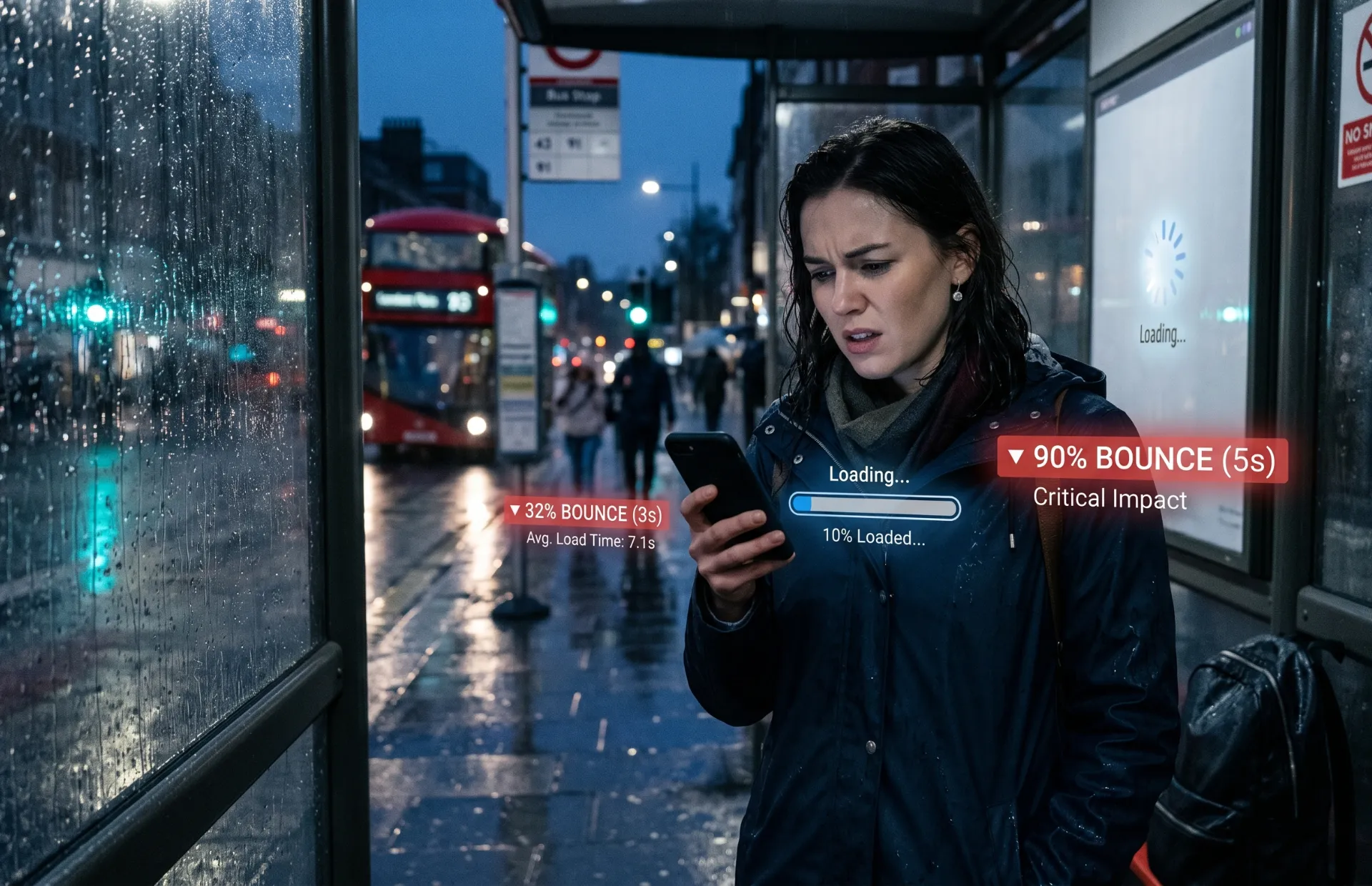
Page speed is the single most impactful cause of user abandonment. When load time increases from 1 second to 3 seconds, bounce probability rises by 32%. At 5 seconds, it increases by 90%. At 10 seconds, the bounce probability is 123% higher than at 1 second. For UK users on mobile networks, 53% of visitors abandon a page that takes longer than 3 seconds to load.
A website that looks impressive on a fast office connection may perform poorly for mobile users in real conditions. UK businesses must measure load speed on mobile specifically, not just desktop, because mobile bounce rates average 67.4% compared to 32% on desktop.
2. Poor Mobile Experience
Over 50% of global web traffic comes from mobile devices in 2025. Despite this, 96% of consumers report encountering websites that are not optimised for mobile. 63% of test participants quit mobile browsing sessions due to avoidable usability problems, including text that is too small to read, buttons that are too close together, and navigation menus that do not function on touch screens.
A responsive layout that simply shrinks desktop content is not a mobile experience. True mobile optimisation considers thumb reach, scroll behaviour, tap target sizes, and content prioritisation for smaller screens.
3. Unclear or Missing Value Proposition
Users decide within the first few seconds whether a website is worth their time. If the homepage does not immediately communicate what the business does, who it serves, and why it is different, visitors leave. This is not a design failure. It is a communication failure that design cannot compensate for.
A clear value proposition sits above the fold, uses plain language, and answers the user's immediate question: am I in the right place? UK businesses that bury their core message beneath animations, sliders, or generic headlines lose visitors before engagement begins.
4. Confusing Navigation and Site Structure
Users follow a mental model when visiting a website. They expect navigation to be logical, consistent, and predictable. When menu labels are vague, categories overlap, or important pages require multiple clicks to find, users abandon the journey rather than work harder to find what they need.
Website usability issues related to navigation account for a significant share of high bounce rates. The correct approach places the most important pages within one or two clicks of the homepage, uses descriptive anchor text in menus, and provides a clear path from entry point to conversion for every user segment.
5. Content That Does Not Match Search Intent
A visitor arriving from a Google search has a specific intent. If the page they land on does not match that intent precisely, they return to Google within seconds. This is one of the most common UX mistakes websites make, particularly for businesses running paid search campaigns that direct traffic to generic landing pages.
Intent mismatch produces high bounce rates even when the page loads quickly and looks professional. Every landing page must reflect the exact query, question, or need that brought the visitor there. Informational intent requires educational content. Commercial intent requires product details, pricing, and clear calls to action.
6. Lack of Trust Signals

UK users are cautious about engaging with unfamiliar websites. Without visible trust signals, a professionally designed website still creates hesitation. Trust signals include client logos, testimonials with full names and companies, case studies with measurable results, certifications, security badges on checkout pages, and clear contact information including a physical address.
A business that prominently displays its portfolio, credentials, and client results reduces exit intent significantly. Trust is not assumed from visual quality alone. It is earned through evidence.
7. Intrusive Pop-ups and Interruptions
Pop-ups that appear immediately on page load, overlays that block content, and autoplay video or audio with sound are among the most frequently cited reasons users leave websites. These interruptions break the natural browsing flow and signal that the website prioritises lead capture over user experience.
The timing, relevance, and frequency of engagement prompts determines whether they help or damage website engagement. A pop-up appearing after a user has scrolled 60% of a page and spent 45 seconds reading converts better and causes fewer exits than one appearing 2 seconds after arrival.
8. Weak or Absent Calls to Action
A visitor who completes reading a page but finds no clear next step will leave. Weak calls to action, buried buttons, vague link text such as "click here", and pages with no logical continuation point all increase bounce rates. Every page on a website must answer the question: what should the user do next?
Effective calls to action are specific, visible, and matched to the stage of the customer journey. A user reading an informational blog post is not ready to buy. A user viewing a pricing page is. The CTA must reflect that difference.
How Poor Website User Experience Affects UK Search Rankings
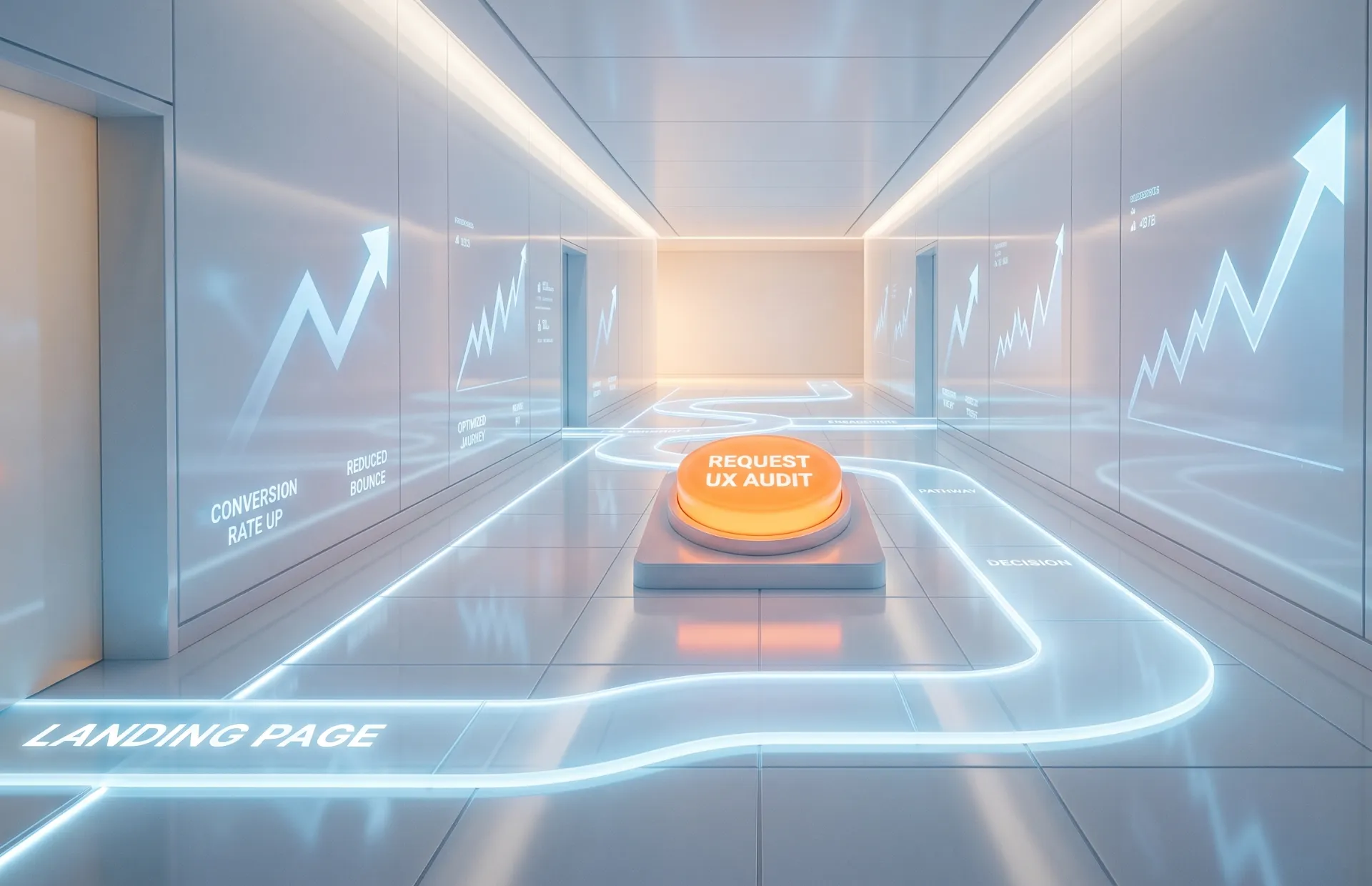
Website engagement metrics influence search visibility. Pages with high bounce rates and short session durations signal to Google that the page did not satisfy the user's query. Search engines demote these pages over time in favour of results that keep users engaged.
Improving website user experience UK delivers a compounding benefit. Better UX reduces bounce rates, increases session duration, improves pages-per-session, and increases conversion rates simultaneously. All four metrics contribute to stronger search engine performance. Addressing poor website user experience is therefore both a revenue decision and an SEO decision.
How to Reduce Website Bounce Rate: A Priority Framework
UK businesses should prioritise fixes in order of impact:
Immediate priority (highest impact):
- Page load speed on mobile, target under 3 seconds
- Mobile responsiveness audit across all device types
- Value proposition clarity on the homepage and key landing pages
Short-term priority:
- Navigation structure review and simplification
- Trust signal audit and implementation
- CTA audit across all pages with conversion intent
Ongoing:
- Search intent alignment review for all organic landing pages
- User behaviour analysis using heatmaps and session recordings
- A/B testing of headlines, CTAs, and page layouts
Investing in website conversion optimisation UK is most effective when it follows a structured audit rather than isolated design changes. Visual changes without behavioural data rarely solve the underlying problems causing high bounce rates.
Frequently Asked Questions
Why do users leave a website quickly even when it looks good?
Visual design does not guarantee usability. Slow load speed, unclear messaging, confusing navigation, and content that does not match user intent cause exits regardless of how the website looks.
What is a good bounce rate for a UK website?
The median bounce rate across industries was 44% as of late 2024. Rates above 55% indicate engagement problems. Rates below 40% indicate strong content and UX alignment with visitor intent.
How does page speed affect bounce rate?
A load time increase from 1 to 5 seconds raises bounce probability by 90%. Targeting a load time under 3 seconds on mobile is the baseline requirement for retaining UK visitors.
Do pop-ups increase or decrease website engagement?
Poorly timed pop-ups appearing immediately on load reduce engagement and increase exits. Contextually relevant pop-ups triggered after 45 to 60 seconds of engagement or at scroll depth above 50% perform significantly better.
How does UX design improve conversion rates?
UX design reduces friction on the path from arrival to action. Clearer navigation, faster load times, trust signals, and intent-matched content each contribute to higher conversion rates independently and together.
Conclusion
Visual design is the first impression. User experience determines whether that impression converts into a customer. UK businesses that experience high bounce rates on professionally designed websites are encountering a gap between how the site looks and how it functions for real users in real conditions.
The causes are consistent: slow load speed, poor mobile optimisation, weak value propositions, confusing navigation, intent mismatch, absent trust signals, intrusive interruptions, and missing calls to action. Each one is fixable. None of them require a complete redesign. They require a structured UX audit and prioritised improvements based on user behaviour data.
Cynosure Designs provides specialist UI/UX design services and web development for UK businesses. If your website is losing visitors it should be retaining, our team identifies exactly where and why users are leaving and implements the UX improvements that reduce bounce rates and increase conversions. Contact us to request a UX audit.
Originally Published June 19, 2026 02:55 PM, Updated June 19, 2026.
Editor's Picks
5 Minute Read | Nayab
5 Minute Read | Sannia
5 Minute Read | Nayab
5 Minute Read | Nayab
We are Google Partners
Being a Google Partner means we deliver excellent customer service, give customers a competitive edge and have been trained to help businesses grow online. We have Digital Marketing Specialists who know the google's algorithm better than any other experts in the field.